
Choosing the Right Silicone – Alkoxy v’s Oxime
A trade guide to neutral-cure silicone
Not all silicone is created equal. Two tubes can look identical on the shelf yet behave very differently in the joint — and the difference shows up over the life of the installation, where a fitter’s reputation is made or lost. This guide explains the chemistry behind neutral-cure silicone, why the choice matters, and what to look for.
The two types of neutral-cure silicone
Silicone sealants cure in one of two broad ways. Acetoxy (acetic) silicones release acetic acid as they set — the familiar vinegar smell — and can corrode metals and react badly with many modern coatings, which makes them a poor choice for window and door work. Neutral-cure silicones avoid that problem, and are the correct family for fenestration.
But “neutral cure” is not a single product. Within the neutral-cure family there are two distinct chemistries — alkoxy and oxime — and they are frequently sold side by side under the same loose “neutral silicone” label. They are not the same, and knowing which is which is the difference between a seal that lasts and one that lets you down.
Alkoxy and oxime in plain terms
- Alkoxy cures by releasing a small amount of alcohol as its by-product. It is low-odour, free of MEKO (a substance carried by oxime products and flagged on their safety data sheets), and tends to be gentler on coated, painted and powder-coated surfaces. It is typically the higher-grade formulation.
- Oxime cures by releasing an oxime by-product, typically MEKO. It is usually the cheaper option, often carries a stronger and longer-lingering odour, and brings a greater risk of staining or yellowing on certain painted and coated substrates.
Both are non-corrosive compared with acetoxy, so both are “safe” in the basic sense. The real separation is in odour, surface compatibility, shrinkage behaviour and whole-life durability — the things that determine whether a joint still looks and performs well years later.
Features and benefits of quality neutral-cure silicone
A premium neutral-cure silicone earns its place through how it performs on site and over time. The features below are what to look for — and what each one actually delivers for the installer and the end customer.
| Feature | Benefit on site |
|---|---|
| Neutral cure | No acetic acid, no vinegar smell, no acid attack on metalwork — the right chemistry for frames, fixings and trims. |
| Non-corrosive to metals | Safe against aluminium and steel — no corrosion and no staining of the metalwork over the years. |
| Primerless adhesion | Bonds directly to glass, aluminium (plain, anodised, lacquered), steel, wood and uPVC without a separate primer — faster work, fewer products to carry. |
| Low shrinkage | Holds its bead and stays full in the joint as it cures, instead of pulling back and cracking at the edges the way lower-grade, lower-solids sealants can. |
| Permanently elastic | Flexes with thermal movement and building settlement through the seasons without splitting or losing its seal. |
| UV, weather & ageing resistant | Built for external perimeter joints — withstands sun, rain and temperature swings without degrading or discolouring prematurely. |
| Wide adhesion range | One sealant handles the common frame, reveal and masonry combinations met on a typical job. |
Why alkoxy is the better choice
When you take those benefits and ask which neutral chemistry delivers them most reliably, alkoxy comes out ahead. A budget oxime silicone will look the same in the cartridge and cost less per tube — but the savings are quickly undone by the issues that surface later.
| Alkoxy neutral silicone | Cheaper oxime silicone | |
|---|---|---|
| Cure by-product | Alcohol — low odour, MEKO-free | Oxime (MEKO) — stronger odour, SDS warnings |
| Working comfort | Pleasant in occupied / enclosed spaces | Noticeable odour that lingers longer |
| Risk on coatings | Low yellowing / staining risk | Greater yellowing / staining risk |
| Shrinkage | Low — stays full in the joint | Often higher — risk of shrink-back |
| Effect on metals | Non-corrosive | Neutral, but formulations vary |
| Whole-life value | Fewer call-backs, longer-lasting seal | Lower upfront cost, higher failure risk |
In short: alkoxy gives you the low odour, the kinder behaviour on coated surfaces, and the dependable low-shrinkage seal that keep an installation looking right and performing for the long term. On a supply-only job, where you may never see the finished result, that reliability is everything.
Available from SevenDay
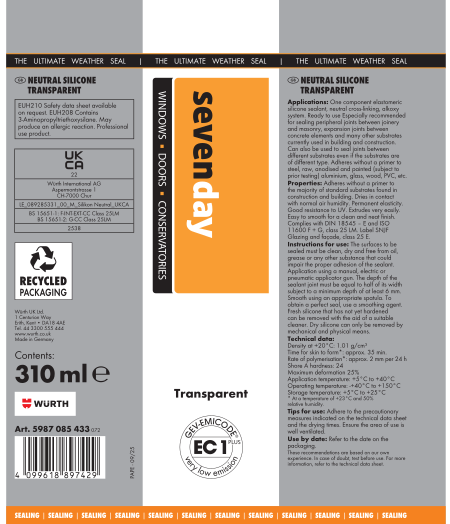
SevenDay, in conjunction with Würth, stocks neutral-cure silicone in the alkoxy form. Available in Neutral or White colour.
As a supply-only trade specialist, SevenDay stocks products chosen for performance, not just price. The SevenDay [Würth manufactured] neutral and white silicone we supply is a one-component, neutral-cure alkoxy elastomeric silicone — ready to use, with excellent primerless adhesion to brick, steel, anodised/lacquered aluminium, glass, wood and uPVC. It is engineered for perimeter and connection sealing: frame-to-reveal joints, woodwork-to-masonry seals, and expansion joints between building components.
It delivers exactly the alkoxy advantages set out above — low odour, MEKO-free, non-corrosive, low shrinkage and built to weather the years — backed by the Würth name for quality and consistency.
Specifying tip: for direct glazing applications such as bedding sealed units, always confirm the chosen product is rated for that use on its technical data sheet, and ask the SevenDay counter team for the appropriate glazing-rated grade.
Available now across the SevenDay depot network. Speak to your local trade counter for stock and pricing.